





Dr. Sahar Selim

Associate Professor

Faculty Office Ext.

1782

Faculty Building

UB1

Office Number

213

Biography

Dr. Sahar Selim is an Associate Professor in the Artificial Intelligence Program at the School of Information Technology and Computer Science (ITCS), Nile University. She also serves as Deputy Head of the Medical Imaging and Image Processing (MIIP) Research Group at the Center for Informatics Sciences (CIS). 

She received her B.Sc. and M.Sc. degrees in Computer Science from Ain Shams University and her Ph.D. in Computer Science from Cairo University. Before pursuing her academic career, she worked as a software developer for three years. She later joined the German University in Cairo as an Assistant Lecturer and subsequently as an Associate Researcher before joining Nile University. 

Her research focuses on artificial intelligence for healthcare, particularly medical imaging, EEG signal analysis, biomedical signal processing, neural engineering, and brain–computer interfaces. Her work also explores multimodal learning, explainable and trustworthy AI, large language and foundation models, privacy-preserving and federated learning, with an emphasis on developing practical healthcare solutions for low-resource settings. 

Dr. Selim has led and contributed to several funded multidisciplinary research projects and has supervised numerous postgraduate students and young researchers. She is a recipient of the L’Oréal–UNESCO For Women in Science Egypt Young Talents Award 2024 in Computer Science and Artificial Intelligence and is actively involved in international research collaboration, scientific mentorship, peer review, and academic service. 

Achievements
  1. Recipient of the L’Oréal–UNESCO For Women in Science Egypt Young Talents Award 2024 for research on AI-based early detection of ovarian cancer using ultrasound imaging. (NU LinkedIn) 

  2. Honored by the Association for Egyptian Women in Mathematics during the 2026 International Day of Women in Mathematics celebration for contributions to artificial intelligence, medical imaging, and AI-driven healthcare solutions.  

  3. The research work “ArEEG: An Open-Access Arabic Inner Speech EEG Dataset” was featured by Nature Middle East, highlighting its contribution as the first open-access Arabic inner-speech EEG dataset.  

  4. Recipient of the ITCS Best Teaching Award 2022 and nominated by ITCS for the Prof. Abdelaziz Salem Outstanding Teaching Award.  

  5. Principal Investigator of “Human–Brain Robot Interaction for Mobility Rehabilitation Control”, selected among the ten finalist applications for the KUKA Innovation Award 2022.  

  6. Research Supervisor and Co-PI of MindPlay: Harnessing Neurofeedback for Children with ADHD, which received Second Place at Nile BioMed Tank 2025.  

  7. Mentor in the AFRICAI Mentorship Program, guiding young African researchers whose work resulted in three accepted papers at MICCAI 2024 satellite events, including one Best Paper Award at the EMERGE Workshop.  

  8. Served as an Area Chair for MICCAI from 2024 to 2026, a Session Co-Chair at MICCAI 2024, and a MICCAI Mentor in 2025.
Recent Publications
Journal

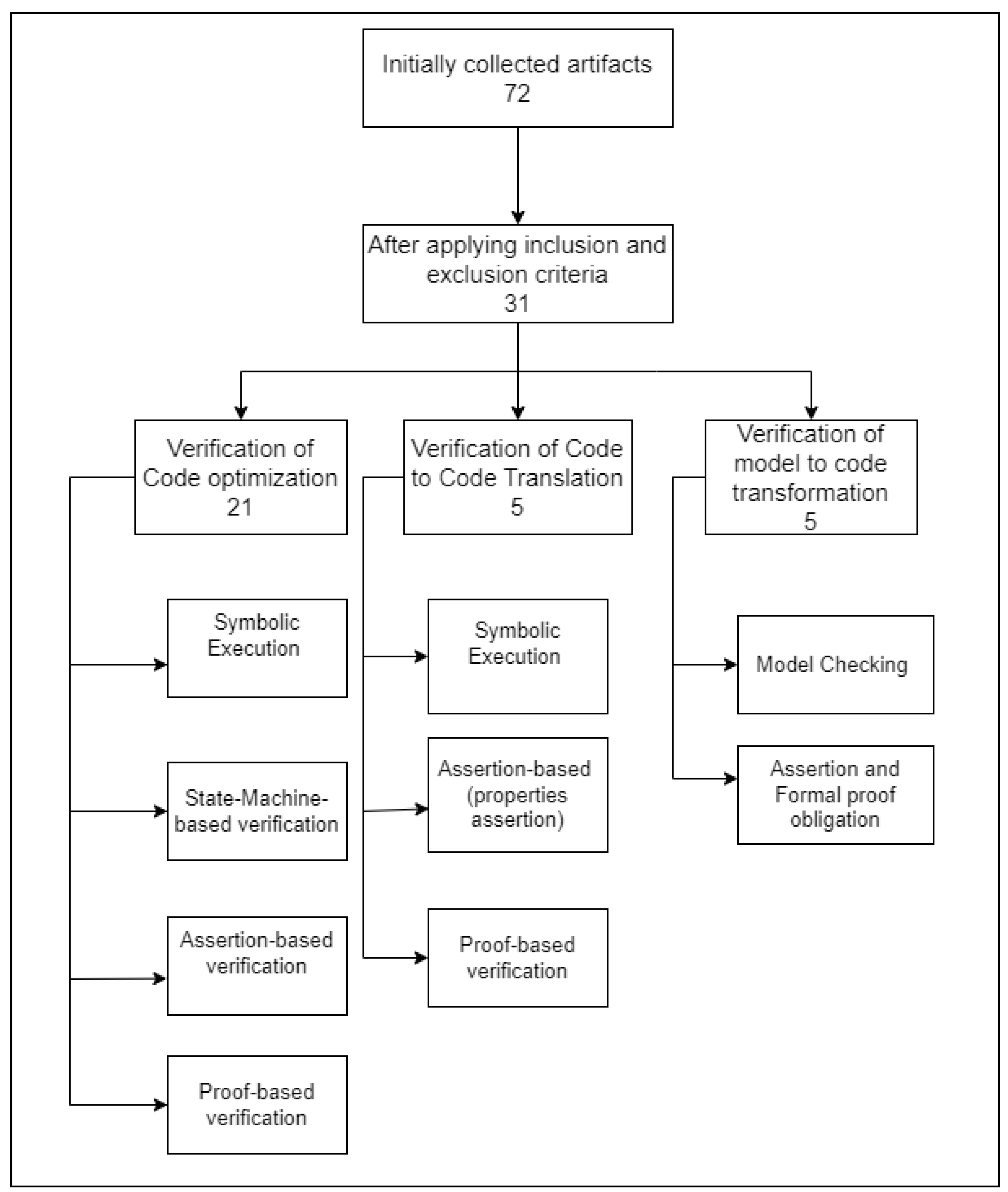
Formal Verification of Code Conversion: A Comprehensive Survey

Code conversion, encompassing translation, optimization, and generation, is becoming increasingly critical in information systems and the software industry. Traditional validation methods, such as test cases and code coverage metrics, often fail to ensure the correctness, completeness, and equivalence of converted code to its original form. Formal verification emerges as a crucial methodology to

Circuit Theory and Applications
Conference Paper

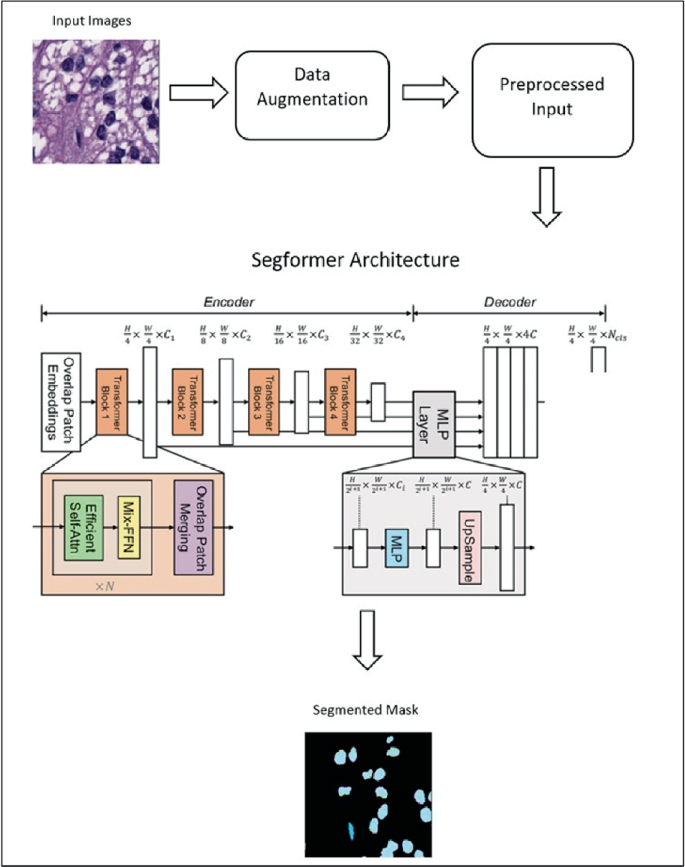
Efficient Semantic Segmentation of Nuclei in Histopathology Images Using Segformer

Segmentation of nuclei in histopathology images with high accuracy is crucial for the diagnosis and prognosis of cancer and other diseases. Using Artificial Intelligence (AI) in the segmentation process enables pathologists to identify and study the unique properties of individual cells, which can reveal important information about the disease, its stage, and the best treatment approach. By using

Artificial Intelligence
Healthcare
Energy and Water
Circuit Theory and Applications
Software and Communications
Conference Paper

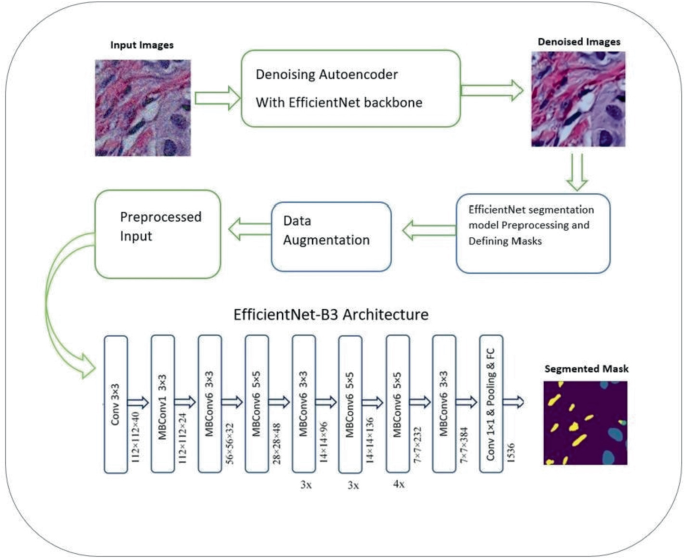
Revolutionizing Cancer Diagnosis Through Hybrid Self-supervised Deep Learning: EfficientNet with Denoising Autoencoder for Semantic Segmentation of Histopathological Images

Machine Learning technologies are being developed day after day, especially in the medical field. New approaches, algorithms and architectures are implemented to increase the efficiency and accuracy of diagnosis and segmentation. Deep learning approaches have proven their efficiency; these approaches include architectures like EfficientNet and Denoising Autoencoder. Accurate segmentation of nuclei

Artificial Intelligence
Healthcare
Circuit Theory and Applications
Software and Communications
Conference Paper

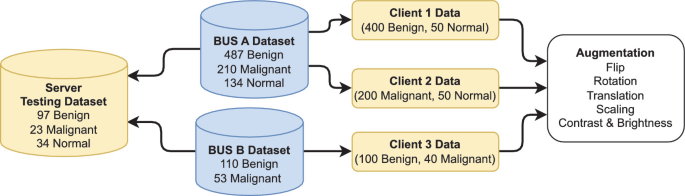
A Novel Approach to Breast Cancer Segmentation Using U-Net Model with Attention Mechanisms and FedProx

Breast cancer is a leading cause of death among women worldwide, emphasizing the need for early detection and accurate diagnosis. As such Ultrasound Imaging, a reliable and cost-effective tool, is used for this purpose, however the sensitive nature of medical data makes it challenging to develop accurate and private artificial intelligence models. A solution is Federated Learning as it is a

Artificial Intelligence
Healthcare
Circuit Theory and Applications
Software and Communications
Conference Paper

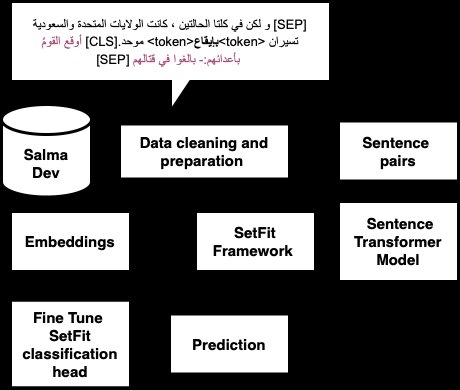
Pirates at ArabicNLU2024: Enhancing Arabic Word Sense Disambiguation using Transformer-Based Approaches

This paper presents a novel approach to Arabic Word Sense Disambiguation (WSD) leveraging transformer-based models to tackle the complexities of the Arabic language. Utilizing the SALMA dataset, we applied several techniques, including Sentence Transformers with Siamese networks and the SetFit framework optimized for few-shot learning. Our experiments, structured around a robust evaluation

Circuit Theory and Applications
Software and Communications
Conference Paper

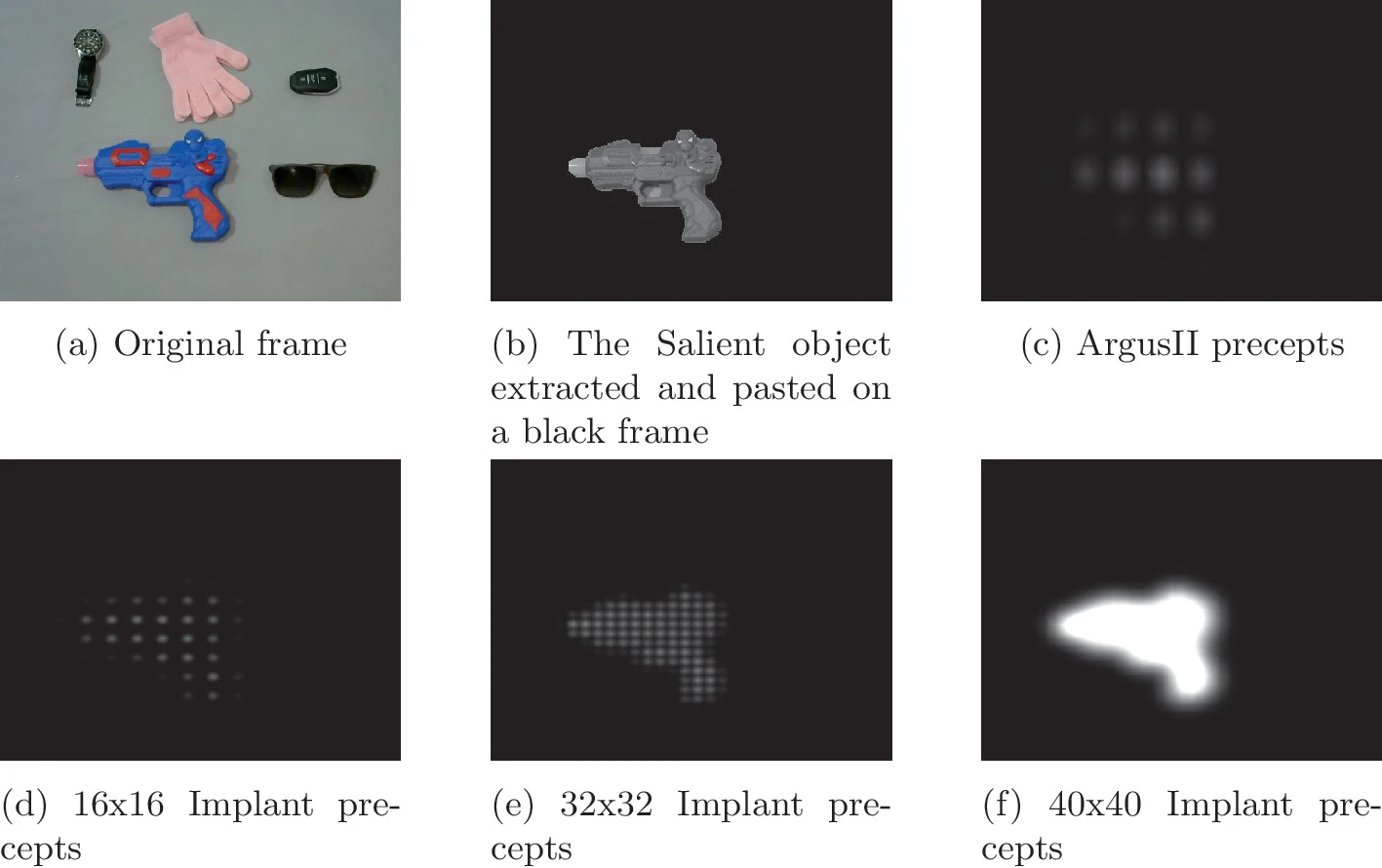
Smart Saliency Detection for Prosthetic Vision

People with visual impairments often have difficulty locating misplaced objects. This can be a major barrier to their independence and quality of life. Retinal prostheses can restore some vision to people with severe vision loss. We introduce a novel real-time system for locating any misplaced objects for people with visual impairments using retinal prostheses. The system combines One For All (OFA

Artificial Intelligence
Circuit Theory and Applications
Agriculture and Crops
Journal

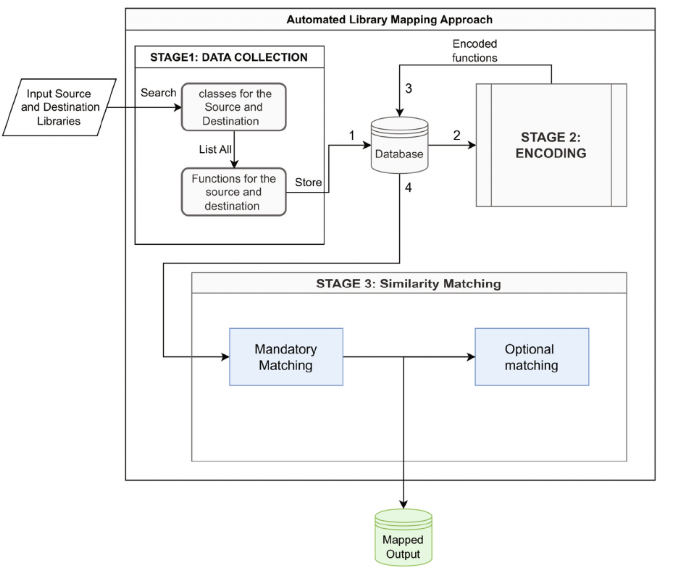
Automated library mapping approach based on cross-platform for mobile development programming languages

Context: The most popular mobile platforms, Android and iOS, are traditionally developed using native programming languages—Java and Kotlin for Android, and Objective-C followed by Swift for iOS, respectively. Due to their popularity, there is always a demand to convert applications written for one of these two platforms to another. Cross-platform mobile development is widely used as a solution

Artificial Intelligence
Circuit Theory and Applications
Conference Paper

A Comparative Analysis of Deep Learning Models for Brain Tumor Segmentation

A brain tumor is an extremely hazardous illness that can affect people of any age. Less than 50% of individuals with brain cancer have a chance of surviving. As a result, precise segmentation of brain tumors is crucial for the diagnosis, planning of the course of treatment, and tracking of the tumor growth. Deep Learning (DL) models can increase the precision and speed of brain tumor diagnosis by

Artificial Intelligence
Conference Paper

Smart Prediction of Circulatory Failure: Machine Learning for Early Detection of Patient Deterioration

Circulatory failure, also known as shock, is a critical condition that can have serious consequences for one's health. Early detection and timely intervention are crucial for improving patient outcomes. Machine learning (ML) models have shown promise in predicting circulatory failure based on clinical data. In our study, we examined different machine learning (ML) models to predict circulatory

Artificial Intelligence
Healthcare
Circuit Theory and Applications
Research Tracks
  • Artificial Intelligence for Healthcare  

  • Medical Imaging and Image Processing  

  • Biomedical Signal Processing and EEG Analysis  

  • Brain–Computer Interfaces and Neural Engineering  

  • Multimodal AI and Data Fusion  

  • Trustworthy and Explainable AI  

  • Large Language Models and Foundation Models for Healthcare  
Projects
a
Research Project

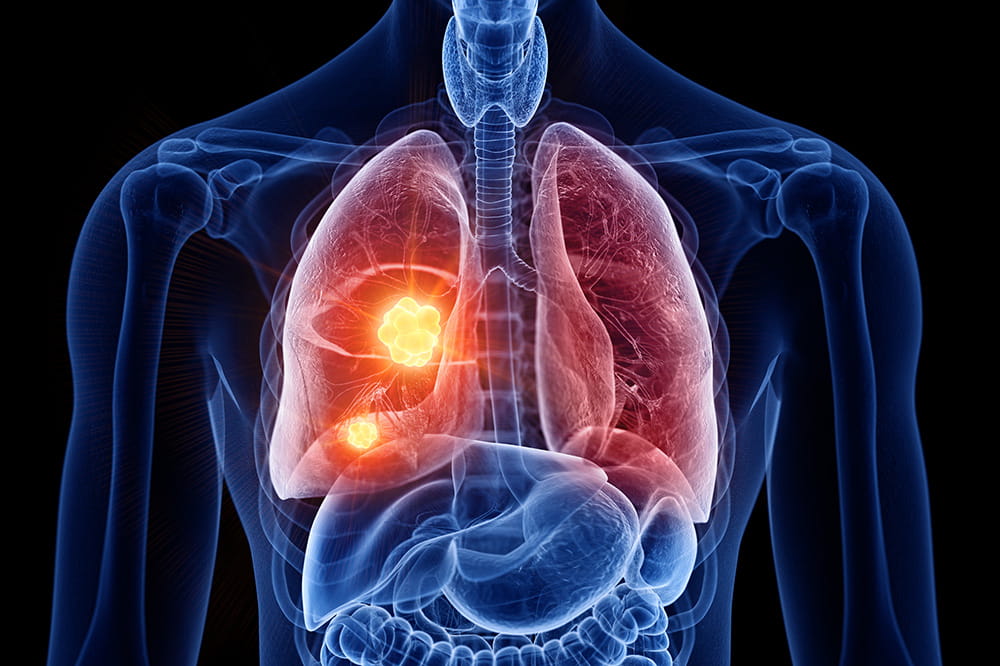
Lung Cancer Detection in Chest X-Ray Images Empowered by 3D Computed Tomography Deep Convolutional Radiomics (CXRClear)
Objective/Contributions: Cancer is treatable if it is discovered at an early stage, and lung cancer screening is a critical component in a preventive care protocol. Although CT imaging affords higher spatial resolution and 3D density information than digital chest X-rays, there are still limitations to having it as a cheap and fast method for rural areas outreach. These limitations are outlined in
3
Research Project

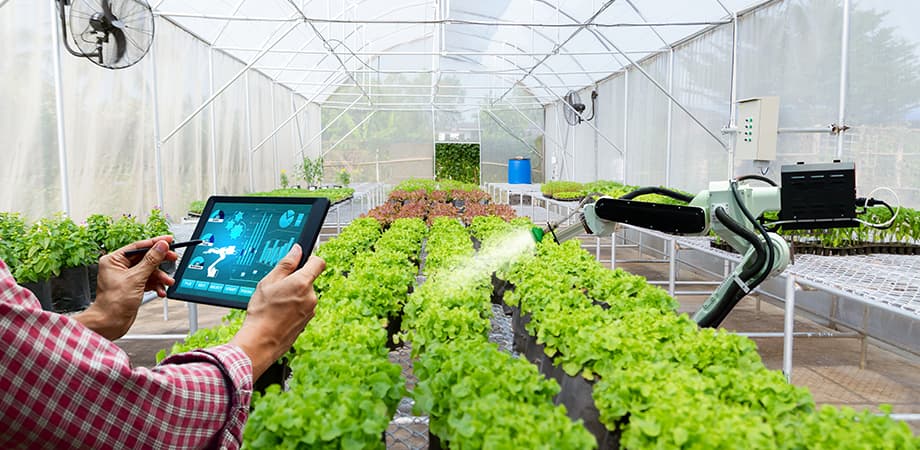
Smart Agricultural Clinic: Egyptian Farmer Electronic Platform for the Future

Objective/Contributions: Smart agricultural clinic (SAC) aims to: 1) Provide an integrated end-to-end digital system to effectively deliver personalized agriculture extension and veterinary services, including best cultivation, fertilization and breeding practices, to farmers and animal producers through the use of mobile/handheld devices. 2) Use advanced computer vision and deep learning