



Publications
Publications
Filter by

A Flow-Based Anomaly Detection Approach With Feature Selection Method Against DDoS Attacks in SDNs
Software Defined Networking (SDN) is an emerging network platform, which facilitates centralised network management. The SDN enables the network operators to manage the overall network consistently and holistically, regardless the complexity of infrastructure devices. The promising features of the SDN enhance network security and facilitate the implementation of threat detection systems through

Different Approximation Techniques For A FOPID Feedback Control of a DC Motor
DC motors are commonly employed in many industrial applications due to their various advantages. This study aims to compare the response of the Oustaloup-Recursive-Approximation (ORA) and El-Khazali's approximation method in controlling a DC motor with a FOPID controller. The two employed methods are used to design the FOPID and approximate. For various fractional orders, many behaviours are

Energy Harvesting Management Unit for Wearable Devices
Energy harvesting materials and systems have become a popular study topic that is rapidly expanding. The harvesters will be used for a variety of applications, including distributed wireless sensor nodes for structural health monitoring, embedded and implanted sensor nodes for medical applications, recharging large system batteries, monitoring pressure in automobiles, powering unmanned vehicles
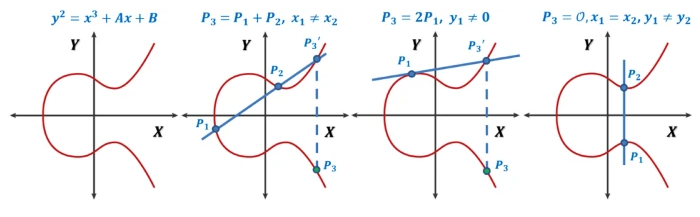
A generalized framework for elliptic curves based PRNG and its utilization in image encryption
In the last decade, Elliptic Curves (ECs) have shown their efficacy as a safe fundamental component in encryption systems, mainly when used in Pseudorandom Number Generator (PRNG) design. This paper proposes a framework for designing EC-based PRNG and maps recent PRNG design techniques into the framework, classifying them as iterative and non-iterative. Furthermore, a PRNG is designed based on the
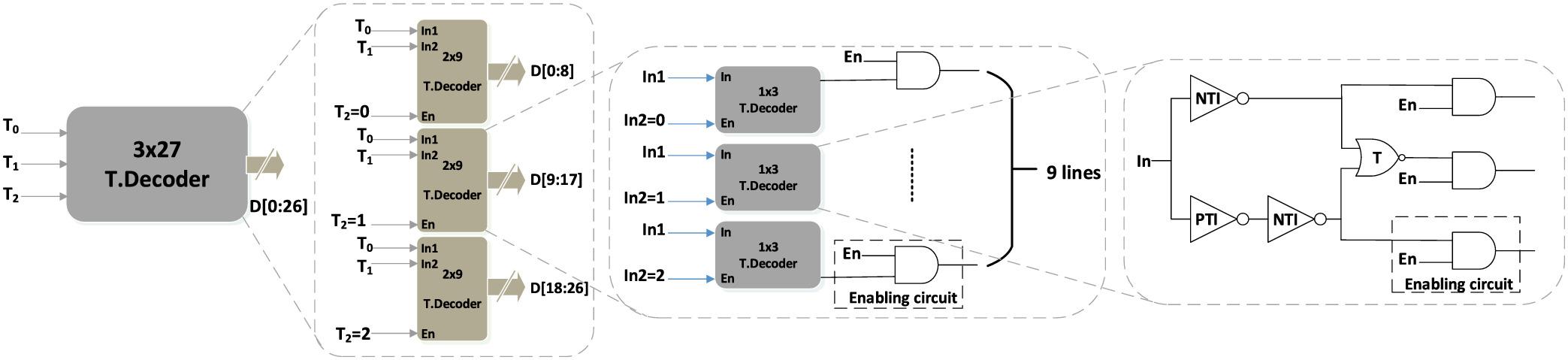
CNTFET-based ternary address decoder design
With the end of Moore's law, new paradigms are investigated for more scalable computing systems. One of the promising directions is to examine the data representation toward higher data density per hardware element. Multiple valued logic (MVL) emerged as a promising system due to its advantages over binary data representation. MVL offers higher information processing within the same number of
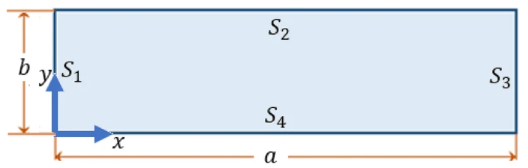
On a two-dimensional model of generalized thermoelasticity with application
A 2D first order linear system of partial differential equations of plane strain thermoelasticity within the frame of extended thermodynamics is presented and analyzed. The system is composed of the equations of classical thermoelasticity in which displacements are replaced with velocities, complemented with Cattaneo evolution equation for heat flux. For a particular choice of the characteristic

A Secured Lossless Visual Secret Sharing for Color Images Using Arnold Transform
Nowadays, with the rapid growth in information, a fast and secure method is eagerly needed to share images. (n, n)-Visual Secret Sharing (VSS) is used to share a secret image into n shares, where the secret can only be recovered using all the n shares and the recovery must be fast with low computational complexity. This paper proposes a secured lossless (n, n)-VSS system based on Arnold transform
A Unified System for Encryption and Multi-Secret Image Sharing Using S-box and CRT
Multi-Secret Image Sharing (MSIS) is used when multiple images need to be shared to multiple participants, but the images can not be recovered without the presence of all shares. In this paper, a unified system for performing encryption and (n,n)-MSIS is proposed. While MSIS is based on the XOR operation, encryption combines the utilization of Chinese Remainder Theorem (CRT), SHA-256, and S-box
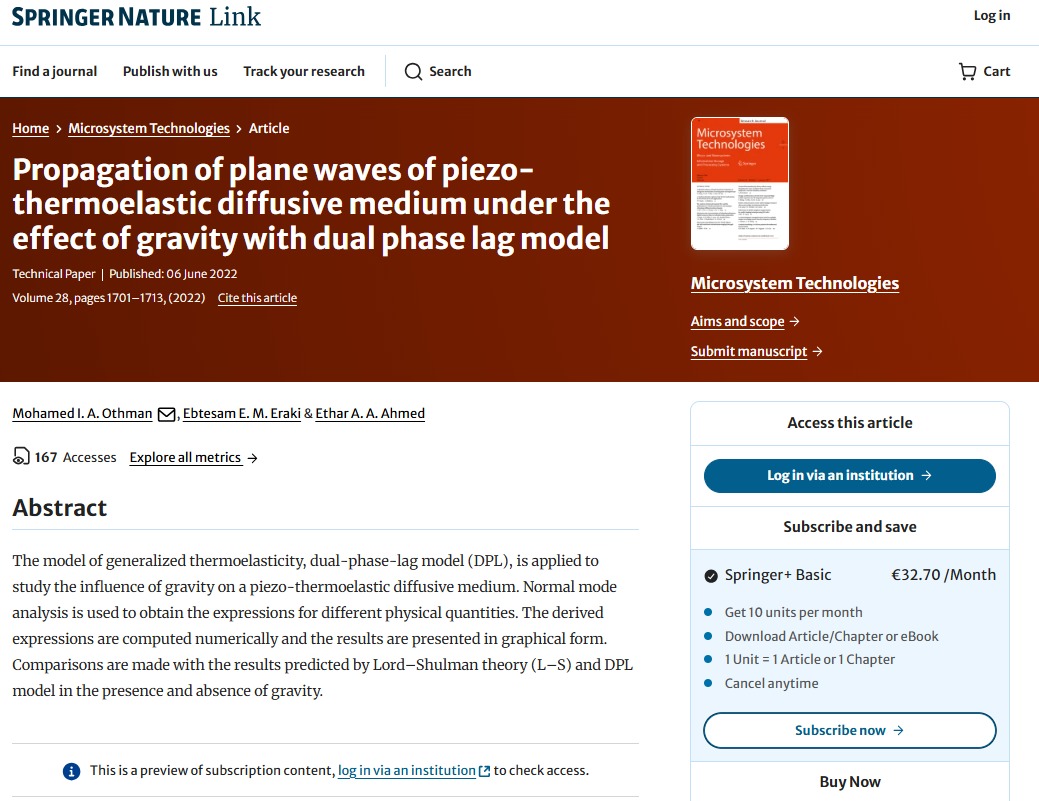
Propagation of plane waves of piezo-thermoelastic diffusive medium under the effect of gravity with dual phase lag model
The model of generalized thermoelasticity, dual-phase-lag model (DPL), is applied to study the influence of gravity on a piezo-thermoelastic diffusive medium. Normal mode analysis is used to obtain the expressions for different physical quantities. The derived expressions are computed numerically and the results are presented in graphical form. Comparisons are made with the results predicted by
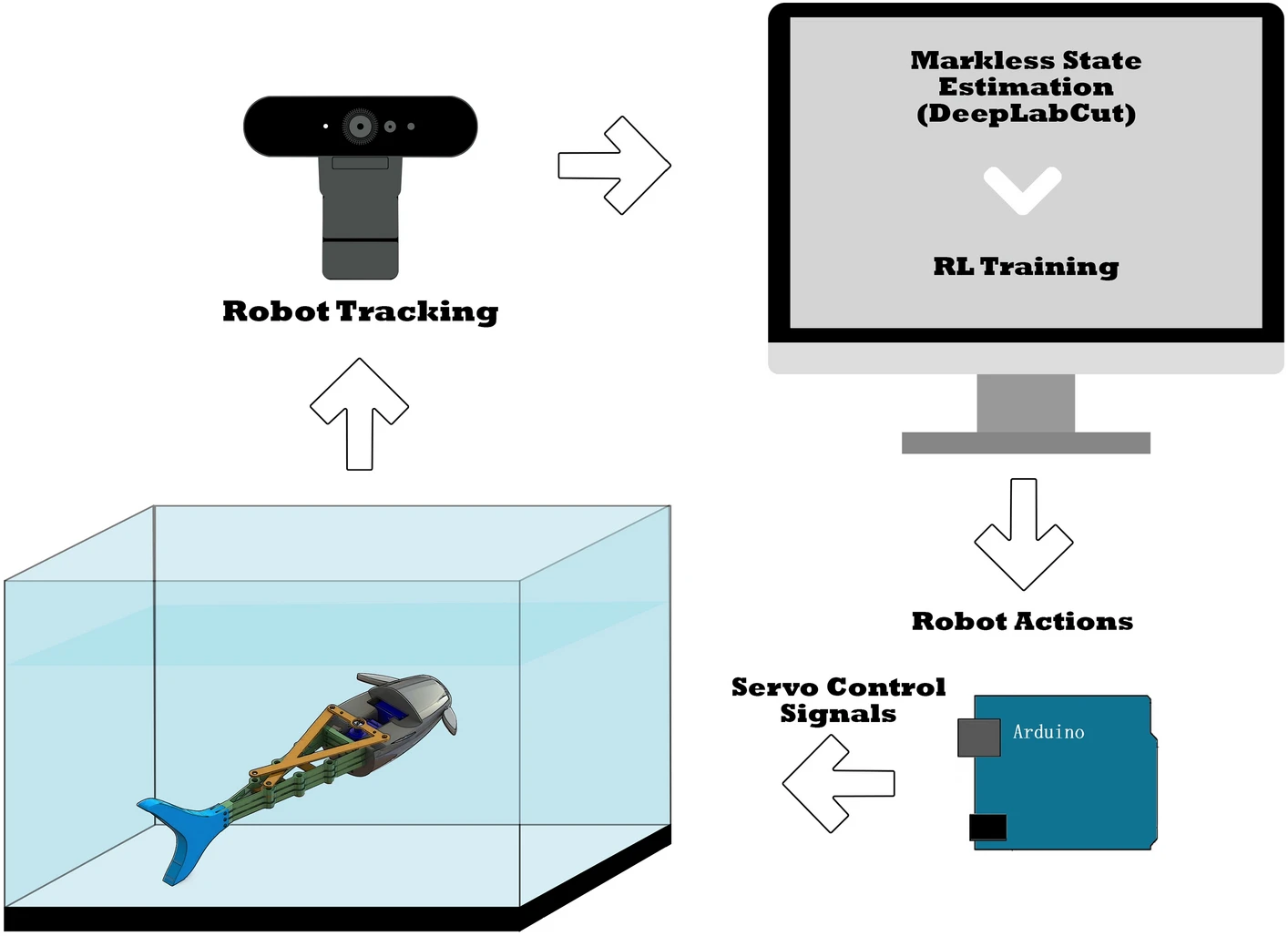
Design and control of soft biomimetic pangasius fish robot using fin ray effect and reinforcement learning
Soft robots provide a pathway to accurately mimic biological creatures and be integrated into their environment with minimal invasion or disruption to their ecosystem. These robots made from soft deforming materials possess structural properties and behaviors similar to the bodies and organs of living creatures. However, they are difficult to develop in terms of integrated actuation and sensing