





yasser.png

Prof. Yasser M. El Battawy

Program Director of Engineering Core

Faculty Office Ext.

1753

Biography

Prof. Yasser El-Batawy is a Professor and Director of the Engineering Core Program at the School of Engineering and Applied Sciences, Nile University, Egypt. He received his B.Sc. in Electronics and Electrical Communication Engineering (Distinction with Honor) in 1996 and his M.Sc. in Engineering Physics from Cairo University in 2000. In 2005, he completed his Ph.D. in Electrical and Computer Engineering at McMaster University in Canada, focusing on the "Modeling of High-Speed Photodetectors." He subsequently held a postdoctoral fellowship in the Photonics Group, ECE department at McGill University, Canada. In 2006, he joined the Engineering Physics Department at the Faculty of Engineering, Cairo University, as an assistant professor and eventually achieved the rank of associate professor. Since February 2018, he has been a professor in Engineering Physics at Nile University. At Nile University, he holds the position of Director of the Engineering Core Program, showcasing his leadership capabilities. Besides, he is currently the head of the Vice Provost Academic Committee and the Director of General Courses in Nile University.  

His research spans optoelectronics and photonics, including high-speed photodetectors, plasmonic photovoltaics, quantum-dot infrared photodetectors, and stochastic analysis of photonic devices. He currently serves as Principal Investigator on an STDF-funded Basic Sciences Research Grant (2025–2028) on plasmonic and nanostructured photonic devices for photovoltaic and infrared-detection applications and has led or co-led several other funded projects. He has over 50 peer-reviewed journal articles, conference papers, and a book chapter, and has supervised numerous graduate theses, two of which received Best Master's Thesis awards at Cairo University. Prof. Yasser has received many prestigious awards including Natural Sciences and Engineering Research Council of Canada (NSERC)-Postdoctoral Fellow for 2005-2007, and Ontario Graduate Scholarship (OGS) – Canada for three times for 2003, 2004 and 2005. 

Prof. Yasser's professional journey also includes a role in 2013 as a senior member in the technical office of the Egyptian Educational Development Fund (EDF). Prof. Yasser has extensive experience teaching a wide range of undergraduate and graduate courses. He has designed, taught, and supervised courses such as Engineering Physics, Electric Circuits, Electromagnetic Fields, Solid-State Electronics, Optoelectronics, and Photovoltaics at various universities, including Cairo University, Nile University. Dr. El-Batawy is recognized for his teaching — he received the Nile University Outstanding Teaching Award (2020) — and for public science communication through his YouTube channel on engineering physics, one of the most-viewed educational channels of its kind in Egypt, with over 5.5 million views. 

Achievements
  1. Prof. Yasser received the Supervision of Best Master Thesis in Cairo University for from Cairo University.
  2. He received the Natural Sciences and Engineering Research Council of Canada (NSERC)-Postdoctoral Fellow (NSERC-PDF) for Postdoctoral Fellowship from Natural Sciences and Engineering Research Council of Canada.
  3. He received the Ontario Graduate Scholarship (OGS) from the Province of Ontario.
  4. He received the NU Outstanding Teaching Award from Nile University.
Recent Publications
Conference Paper

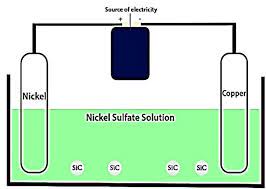
Enhancing CSP using Spot Fresnel Lens and SiC Coating

Concentrated Solar Power (CSP) systems have a good potential as a renewable energy candidate that are based on converting the incident solar thermal energy to an electrical energy. In this paper, CSP using spot Fresnel lens instead of traditional lenses is presented to enhance the efficiency of the system, where Silicon Carbide (SiC) is used as a coating material for the receiver of the system due

Circuit Theory and Applications
Journal

Stochastic analysis for one dimensional photonic crystals

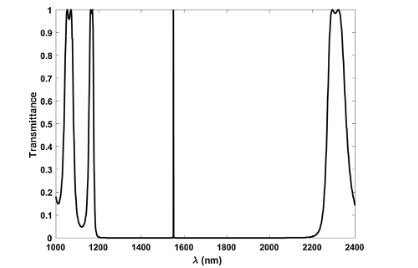
Tolerance variations of the design parameters of the photonic crystals due to fabrication processes have a strong effect on the performance of the photonic crystals and their operating wavelengths. In this work, the uncertainties of the design parameters of one-dimensional photonic crystals (1D-PCs) and their impacts on the PCs optical properties and the operating performance are investigated. The

Circuit Theory and Applications
Journal

J-V characteristics of plasmonic photovoltaics with embedded conical and cylindrical metallic nanoparticles

Plasmonic photovoltaics (PVs) are promising structures that improve thin-film photovoltaics performance, where optical absorption is improved via embedding metallic nanoparticles in the PV's active layer to trap the incident optical wave into the photovoltaic cell. The presented work investigates the design of PV with both structures of conical and cylindrical metallic nanoparticles through

Healthcare
Energy and Water
Circuit Theory and Applications
Conference Paper

Conical and cylindrical metallic nanoparticles design for plasmonic photovoltaics enhancement

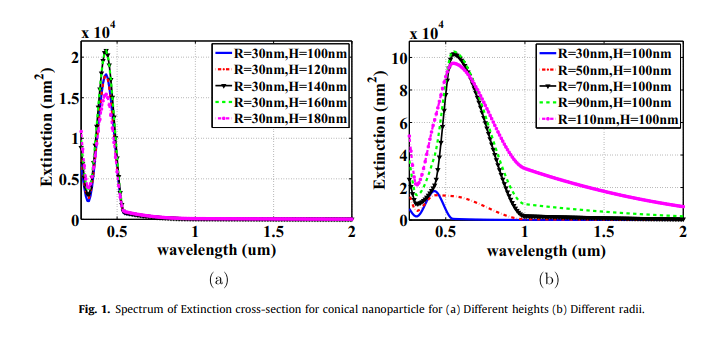
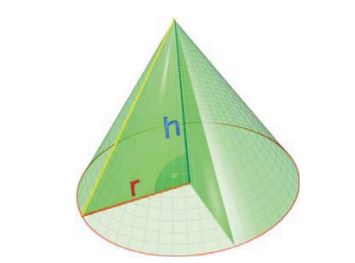
Plasmonic Photovoltaics are considered as a promising candidate for enhancing the optical absorption by embedding metallic nanoparticles that confine the incident light in the cell. This results in thin-film PVs with improved efficiency. In this paper, the effects of embedding both conical and cylindrical metal nanoparticles in plasmonic PVs are investigated. The extinction cross sections for

Circuit Theory and Applications
Conference Paper

Interfacial modification of perovskite solar cell using zno electron injection layer with pdms as antireflective coating

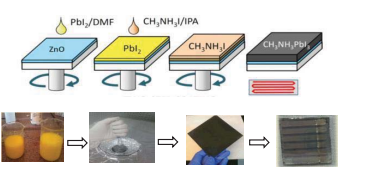
Recently, perovskite solar cells (PSCs) exhibits tremendous power conversion efficiency and has shown enhanced figures of merit being secured regarding cell stability. In this paper, perovskite solar cell with Zno electron injection layer is presented. The humidity degradation of the perovskite active layer and the efficiency of the cell is observed under several conditions. Using ZnO as a planner

Energy and Water
Circuit Theory and Applications
Journal

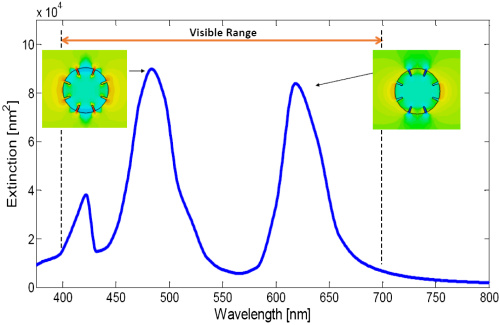
Enhanced plasmonic photovoltaic using embedded novel gear-shaped nanoparticles

In this paper, novel gear-shaped nanoparticles are introduced for the first time to enhance the photovoltaic (PV) efficiency. This has been achieved via increasing the overall power absorption by the PV semiconductor material in both visible and near-infrared ranges. The modes of the new gear-shaped nanoparticles are investigated. A parametric study has been performed which demonstrates how the

Software and Communications
Research Tracks
  • Optoelectronics
  • High-Speed Photodetectors
  • Quantum Dot InfraRed Photodetectors
  • Plasmonic Photovoltaics 
  • Stochastic Modeling of Photonic Devices
Projects
1
Research Project

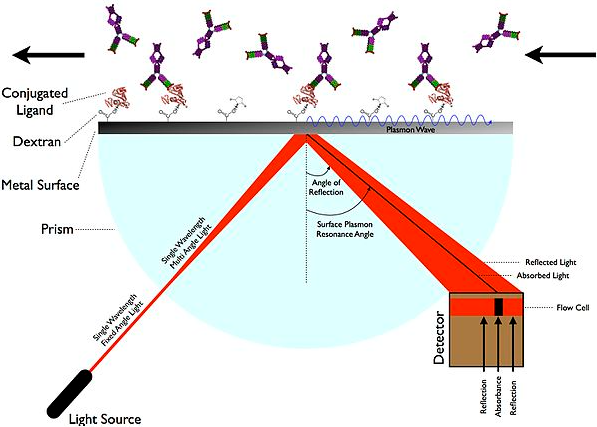
Plasmonic Sensors for Biomedical and Infra-Red Detection Application

Objective/Contributions: The project aims at proposing a new Infra-Red sensor design by employing a plasmonic effect. Plasmonic devices have great potential for biomedical applications due to the sensitivity of the localized surface plasmon resonance to the surrounding medium. Therefore, proposed metasurface sensors are tuned for Biomedical applications as medical diagnostic tools. Enhancing
Research Project

Terahertz Metamaterial Structures for Biomedical Sensing Applications

A new design of interdigitated E-shaped metamaterial sensor has been proposed. The structure has been intensively studied using CST software and is optimized to achieve ultrahigh sensitivity at the Terahertz range. Two different structures of the E-shaped sensors have been proposed. Both structures are characterized by a high absorption level at their resonant peaks with an ultra-high sensitivity