



Circuit Theory and Applications
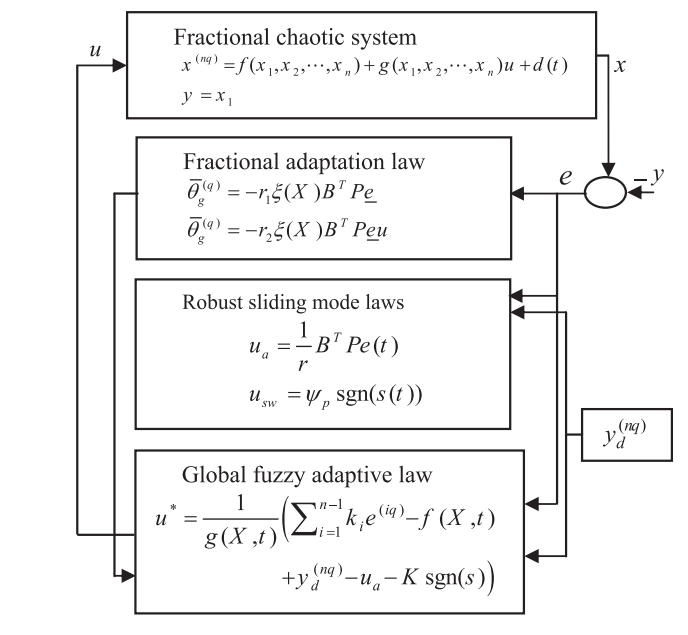
Enhanced Fractional Order Indirect Fuzzy Adaptive Synchronization of Uncertain Fractional Chaotic Systems Based on the Variable Structure Control : Robust H ∞ Design Approach
This work presents a novel fractional H8 robust indirect adaptive fuzzy logic control strategy based on the variable structure control theory design (FRAFC-VSC) to synchronize two fractional-order chaotic systems. The contribution of this work is the use of an adaptive fractional order PI-regulator and a saturation function to eliminate the chattering phenomena in the control and surface signals. Stability analysis is performed for the proposed method with an acceptable synchronization error level based on Lyapunov stability criterion. The synchronization of two different fractional order
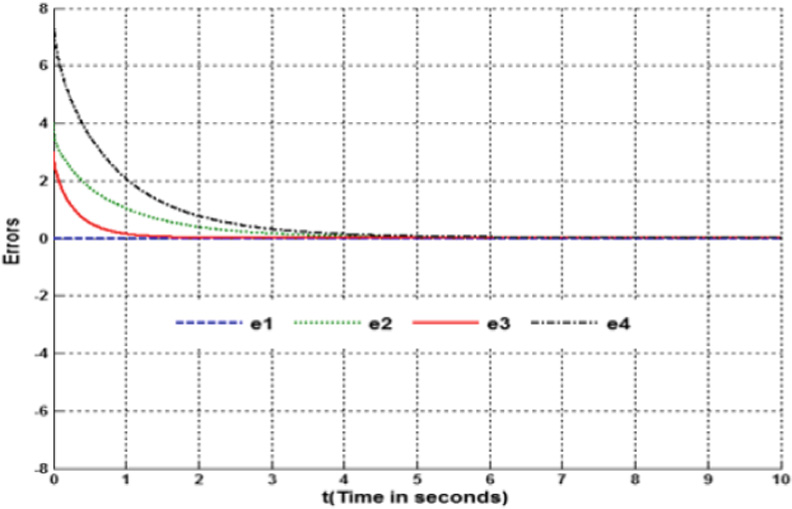
A New Generalized Synchronization Scheme to Control Fractional Chaotic Systems with Non-identical Dimensions and Different Orders
This paper addresses the problem of generalized synchronization (GS) between fractional order chaotic systems. In this paper, we propose a new control strategy for a complex generalized synchronization (GS) scheme dedicated to non-identical fractional-order chaotic systems characterized by different dimensions. The proposed control parameters are nonlinear in nature. In order to ensure that the proposed scheme converge towards zero, we establish the asymptotic stability of the zero solution to the error system by means of the stability of linear fractional-order systems. In order to assess the
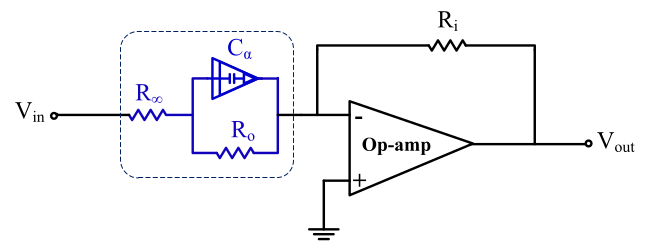
A Modified Differentiator Circuit for Extracting Cole-Impedance Model Parameters Using Meta-heuristic Optimization Algorithms
A differentiator-based set up is proposed as an alternative solution to measure bio-impedance. The method is modifying the differentiator circuit, replacing the capacitor with the Cole-impedance model representing the biological (fruit) sample. The proposed differentiator gain response (with the embedded fruit) is experimentally recorded. The experimental data’s post-processing is performed using meta-heuristic optimization techniques to extract the Cole-impedance model unknown parameters by solving a group of nonlinear equations. Three meta-heuristic optimization algorithms are used: the moth
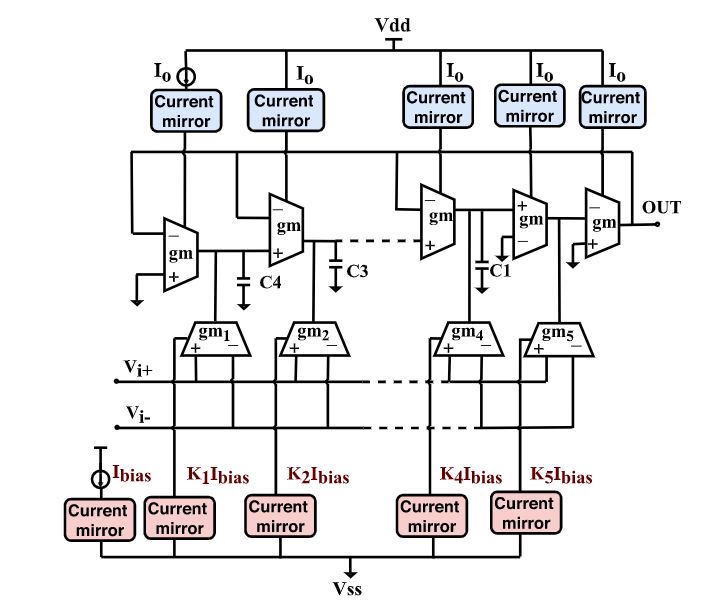
Implementation and analysis of tunable fractional-order band-pass filter of order 2α
This paper proposes a new design of a 2α-order fractional-order band-pass filter with tunability feature. The proposed filter is approximated with the Continued Fraction Expansion and Matsuda second-order approximations. The realized filter transfer function is based on the Inverse Follow the Leader Feedback configuration, with Operational Transconductance Amplifiers as active elements. As a result, the order of the proposed filter can be adjusted by changing a single parameter, which is the bias current Ibias. A comparison with the previous works is performed, showing the advantage of the
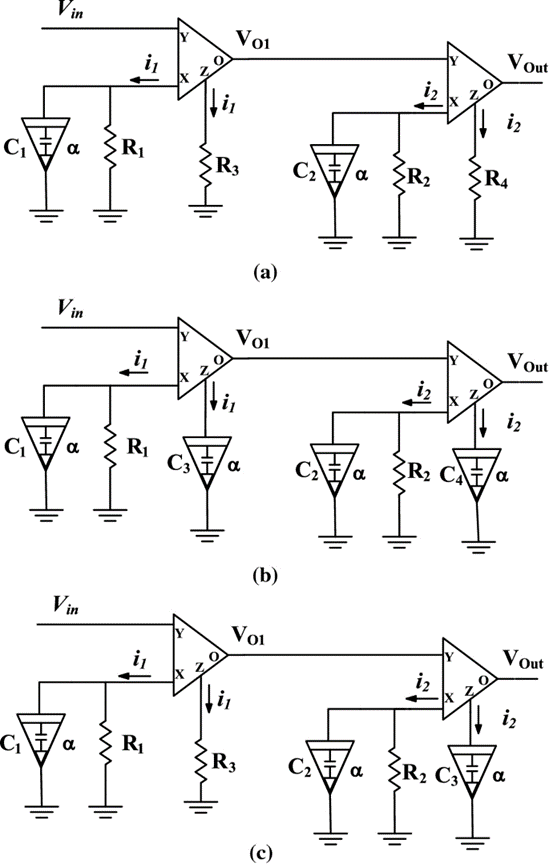
On the Approximations of CFOA-Based Fractional-Order Inverse Filters
In this paper, three novel fractional-order CFOA-based inverse filters are introduced. The inverse low-pass, high-pass and band-pass responses are investigated using different approximation techniques. The studied approximations for the fractional-order Laplacian operator are the continued fraction expansion and Matsuda approximations. A comparison is held between the ideal filter characteristic and the realized ones from each approximation. A comparative study is summarized between the proposed circuits with some of the released inverse filters introduced in the literature. Foster-I
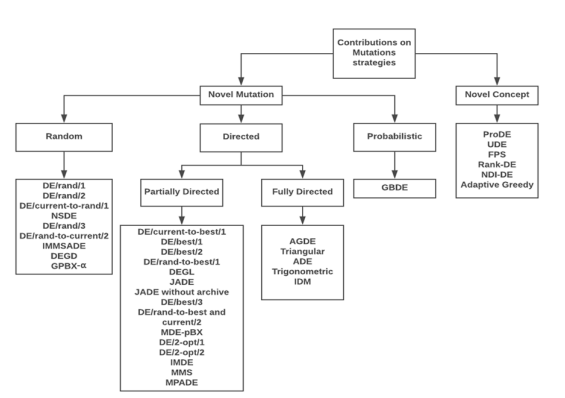
Differential Evolution Mutations: Taxonomy, Comparison and Convergence Analysis
During last two decades, Differential Evolution (DE) proved to be one of the most popular and successful evolutionary algorithms for solving global optimization problems over continuous space. Proposing new mutation strategies to improve the optimization performance of (DE) is considered a significant research study. In DE, mutation operation plays a vital role in the performance of the algorithm. Therefore, in this paper, comprehensive analysis of the contributions on basic and novel mutation strategies that were proposed between 1995 and 2020 is presented. A new taxonomy based on the
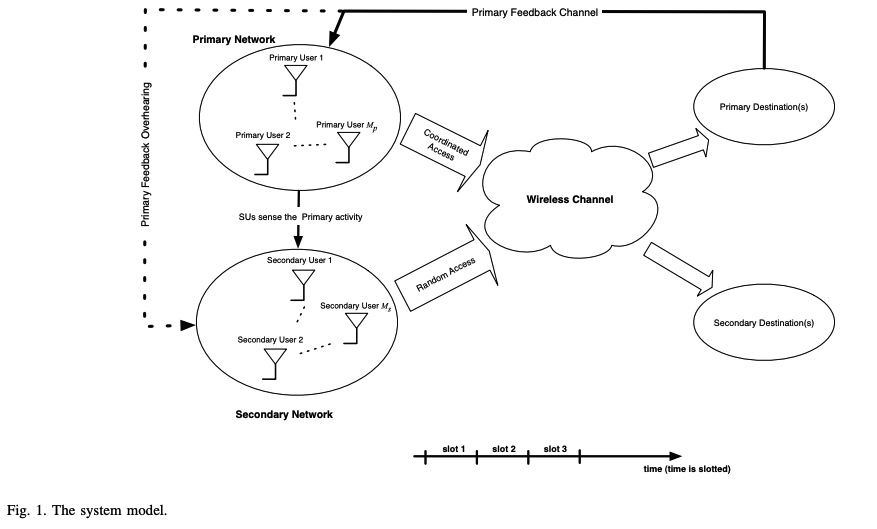
A feedback-soft sensing-based access scheme for cognitive radio networks
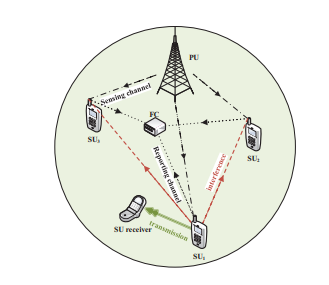
In this paper, we examine a cognitive spectrum access scheme in which secondary users exploit the primary feedback information. We consider an overlay secondary network employing a random access scheme in which secondary users access the channel by certain access probabilities that are functions of the spectrum sensing metric. In setting our problem, we assume that secondary users can eavesdrop on the primary link's feedback. We study the cognitive radio network from a queuing theory point of view. Access probabilities are determined by solving a secondary throughput maximization problem
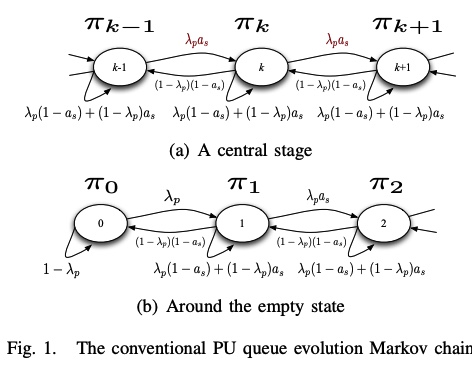
A feedback-based access scheme for cognitive radio systems
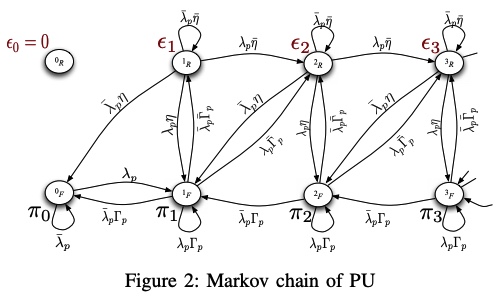
In this paper, we consider the design of access schemes for secondary users in cognitive radio systems based on the primary user feedback information. We consider a secondary user employing a random access scheme with an access probability that depends on the primary user feedback state. We show that the proposed scheme can enhance the system performance in terms of the secondary throughput and/or primary user delay while guaranteeing a certain quality of service (QoS) for the primary user; this is due to the fact that the proposed scheme avoids sure collisions between the primary and
A feedback-based access scheme for cognitive-relaying networks
In this paper, we consider a cognitive relaying network in which the secondary user accesses the channel with a certain access probability that depends on the feedback information sent by the primary destination. In addition, the secondary user is granted relaying capabilities by which it can relay primary traffic that was unsuccessfully transmitted by the primary user. We show that this proposed scheme enhances the performance of the secondary user as well as the primary user, while the QoS requirements of the primary user is unviolated. The secondary user can avoid sure collisions with the
Full-duplex cooperative cognitive radio networks
In this paper, we study the impact of a full-duplex secondary node on a cognitive cooperative network with Multipacket Reception (MPR) capabilities at the receivers. Motivated by recent schemes that make full-duplex communication feasible, we study a model with one primary and one secondary transmitter-receiver pair, where the secondary transmitter is able to relay primary unsuccessful packets. Cooperation between primary and secondary users has been previously shown to be beneficial for the primary and the secondary users in terms of stable throughput. Our model assumes an imperfect full