

FESTO Professional Certificate

FESTO Professional Diploma in Industrial Automation & Mechatronics

FACT Center
Location
On-Campus
Duration
320 Credit hours - 10 Weeks

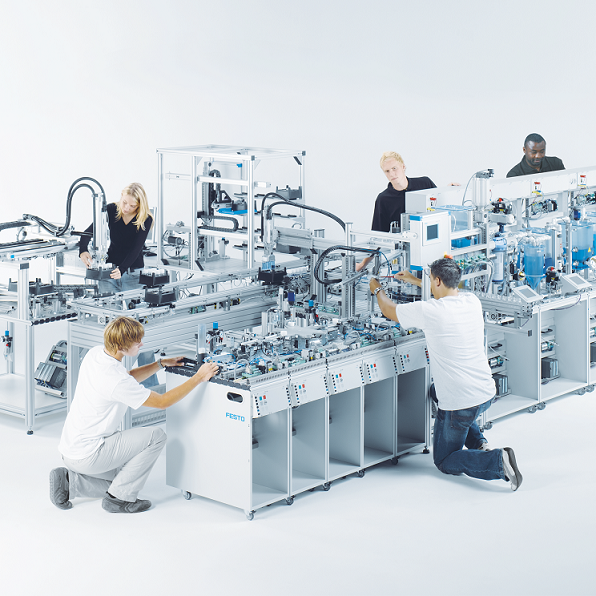
Elevate your expertise with the FESTO Professional Diploma, a comprehensive program designed to equip participants with industry-relevant skills in industrial automation and mechatronics technologies. The diploma offers immediate access to high-tech industrial equipment and increased job opportunities in the field.

Teaching Hours
Weeks
Credential

Credential

FESTO
Professional Certificate

Location

Location

On-Campus

Language

Language

English
(Arabic Support)

Program overview

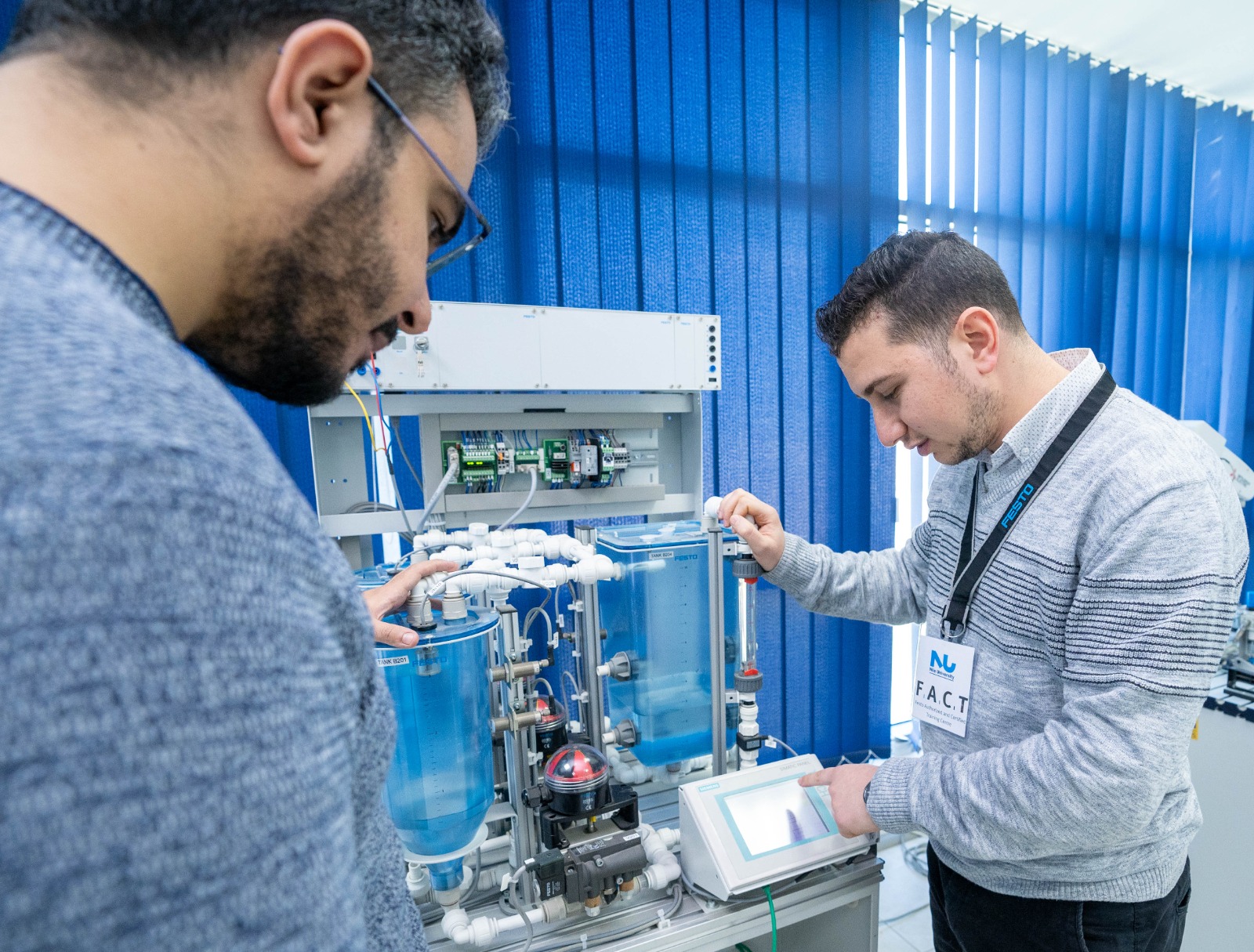
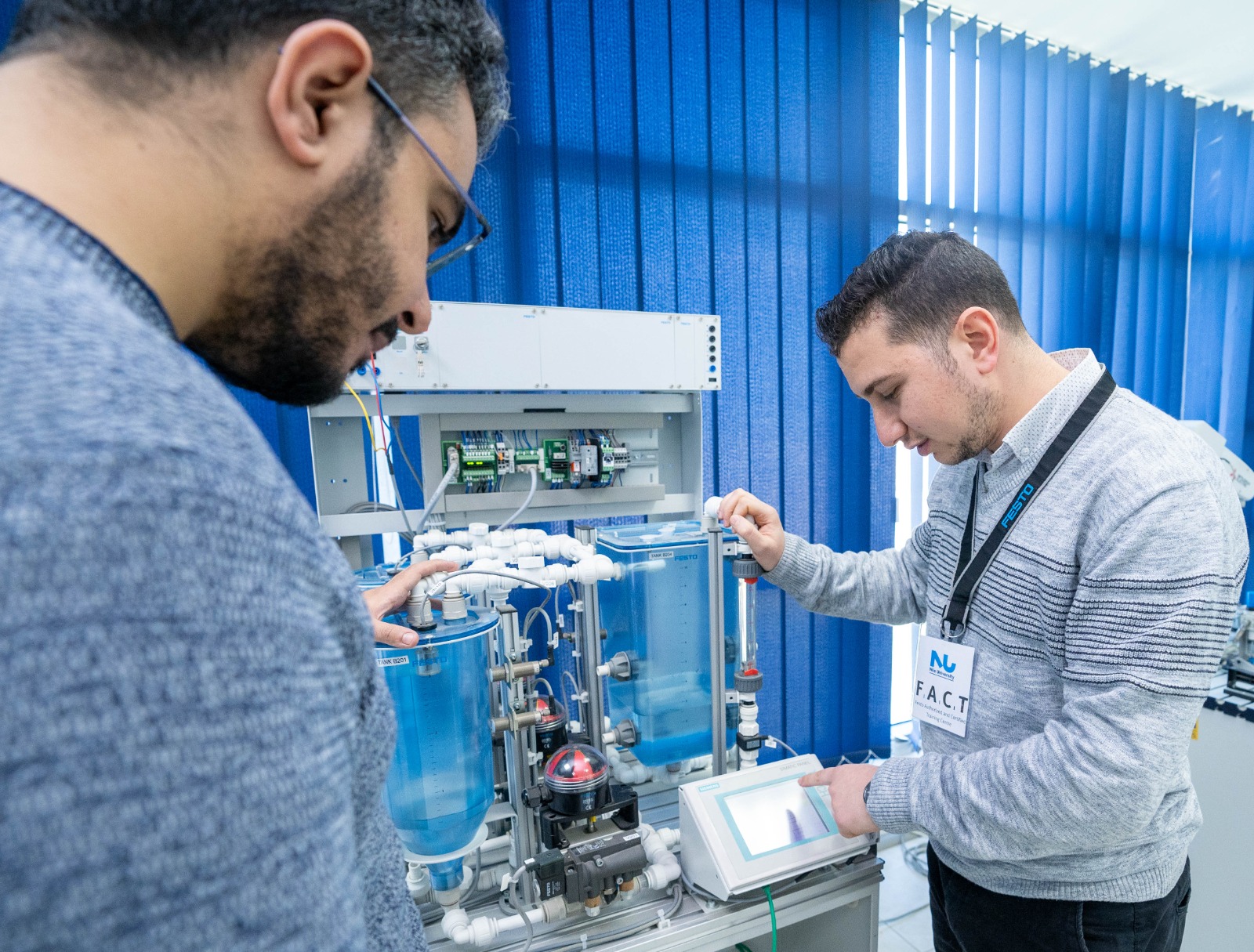
Advance your career with a comprehensive professional diploma designed to develop industry-relevant skills across the core technologies of industrial automation and mechatronics. Through intensive competency-based training and practical exposure to modern industrial equipment, participants build the technical capabilities needed to work effectively with manufacturing, control, automation, and mechatronic systems.

Why Choose the FESTO Professional Diploma?

International industrial certification from FESTO and AHK, as stated on the current FACT Center website.

Practical access to modern industrial technologies and training equipment.

Competency-based training aligned with current and future industry needs.

Broad technical coverage across fluidics, electrical drives, robotics, CNC, and automation.

Designed to strengthen employability and the ability to handle modern manufacturing and control systems.

Who Should Attend?

Engineering graduates, practicing engineers, technicians, maintenance and production professionals, automation specialists, and individuals seeking comprehensive practical preparation for careers in industrial automation and mechatronics.
Curriculum

What You Will Study

Pneumatics | PNB 111

  • Introduction Basic Technologies of Mechatronics.
  • Theory in Pneumatics - fundamentals, applications, air pressure-supply.
  • Function of the components.
  • Handling of FluidSim Pneumatics.
  • Direct and indirect control of pneumatic cylinders.
  • Memory control.
  • Basic digital functions - AND, OR, NOT, RS-FF.
  • Pressure and time control.
  • Interlacing circuit.

Electro-Pneumatics Basic | EPB 121

  • Introduction Basic Technologies of Mechatronics.
  • Theory in Pneumatics and Electrics - fundamentals, applications, supply.
  • Function of the components.
  • Handling of FluidSim Pneumatics.
  • Direct and indirect control in Electro-Pneumatics.
  • Memory control.
  • Basic digital functions - AND, OR, NOT, RS-FF.
  • Function of end-position sensors.
  • Interlacing circuit.

Hydraulics Basics | HYB 311

  • Introduction Basic Technologies of Mechatronics.
  • Theory in hydraulics - fundamentals, applications & supply.
  • Function of the components.
  • Handling of FluidSim hydraulics.
  • Differences between hydraulics & pneumatics.
  • Plan, Design, set-up & test of basic hydraulics circuits.
  • Plan, Design, set-up & test of pressure control circuits.
  • Plan, Design, set-up & test of flow control circuits.

DC Machines Control and Characteristics | EDDC311

  • Direct Current Machines. 
  • SI Units & Electrical Basics. 
  • DC Motors Classification. 
  • DC Motor Structure & Components. 
  • DC Motor Speed, Direction & Torque. 
  • DC Motor Control & Protection. 
  • DC Motor Commissioning. 
  • DC Motor Graphical Representation & Characteristic Curve. 
  • DC Motor Performance.

AC Machines Control and Characteristics (EDAC 321)

  • SI Units & Electrical Basics.
  • AC Motors introduction.
  • AC Motors Classification.
  • Induction Motors.
  • 3-Phase Asynchronous Motor.
  • 3-phase Motor Speed, Direction & Torque.
  • 3-phase Motor Control & Protection.
  • 3-phase Motor Commissioning.
  • 3-phase Motor Graphical Representation & Characteristic Curve.
  • 3-phase Motor Performance.

Robotics | ROB 111

  • Robot applications in the industry now and in the future
  • Different types of Robots
  • Part systems of an Industrial Robot
  • Handling of the 3D simulation program CIROS
  • Renumber the existing position numbers
  • Plan, edit and test projects using CIROS
  • Handling of the online software version
  • Teach in and renumber of the existing positions
  • Test the simulated projects on the real Robot

CNC Basics - Sinumerik810/840D Milling and Turning | CNC 413

  • Brief history of the ISO G-Code language: the beginning, the actual state, the industrial point.
  • Principles of ISO G-Code programming.
  • Organization of a single instruction and the complete structure of a Block.
  • Description of the words set: N, G, F, S, F, T, M.
  • Syntax of the ISO G-Code words for Milling and Turning machines according to SIEMENS.
  • Systems of Coordinates: Absolutes and Relatives, Cartesians or Polars.
  • Machine coordinate system and user coordinate system.
  • Set-up of the machine for the required job.
  • Tool path: kind of paths and its control.
  • Technological parameters.
  • Structure of an NC program.
  • Samples according to SIEMENS Sinumerik810/840D.

CNC Advanced - Sinumerik810/840D Lathe and Mill | CNC 422

  • Brief introduction about the ISO G-Code language for advanced programs: tool compensations, coordinate system management, main and sub-program, cycles.
  • Principles of ISO G-Code SIEMENS Sinumerik810/840D structured program.
  • Set of instructions for tool length and radius compensation for lathe and milling machines.
  • How to start and how to close the tool compensation inside an NC program.
  • The User Coordinates System: how to set and how to change it inside a program.
  • How to write a main program and how to write a sub-program.
  • The combination of main and sub-programs for repeating a job for an exact number of items; how to call a sub-program.
  • The combination of main, sub-programs, and User Coordinate Systems.
  • The set of cycles included for Milling operations.
  • The set of cycles included for Turning operations.
  • Samples according to SIEMENS Sinumerik810/840D.

PLC Programming Basic | PLC 131

  • Overview of controllers used in the Industry
  • PLC fundamentals in general
  • Functions of the components used in Electro-Pneumatics
  • Handling of the PLC programming software
  • Definition of the in- and output addresses
  • Absolute and symbolic addressing
  • Structural programming and uncondition and condition call
  • Planning, edit and test projects in digital technology

FA - PLC Programming Advanced | PLC 232

  • Functions of the single FMS stations
  • Components - specification and function
  • Definition of the input and output addresses of the FMS stations
  • Absolute and symbolic addressing
  • Plan, edit and test PLC projects for each single FMS station
  • Planning of the I/O-communication between the single stations
  • Plan, edit and test the I/O-communication
  • Plan, edit and test the material- and signal flow through the entire FMS
152,640 EGP
NU Students
38,160 EGP
Outside NU Students
45,792 EGP