

FESTO Certified Programs

Industrial Automation Technologies

Engineering & Industrial Automation
Location
On-Campus
Duration
32 Contact hours - 4 Days per Course

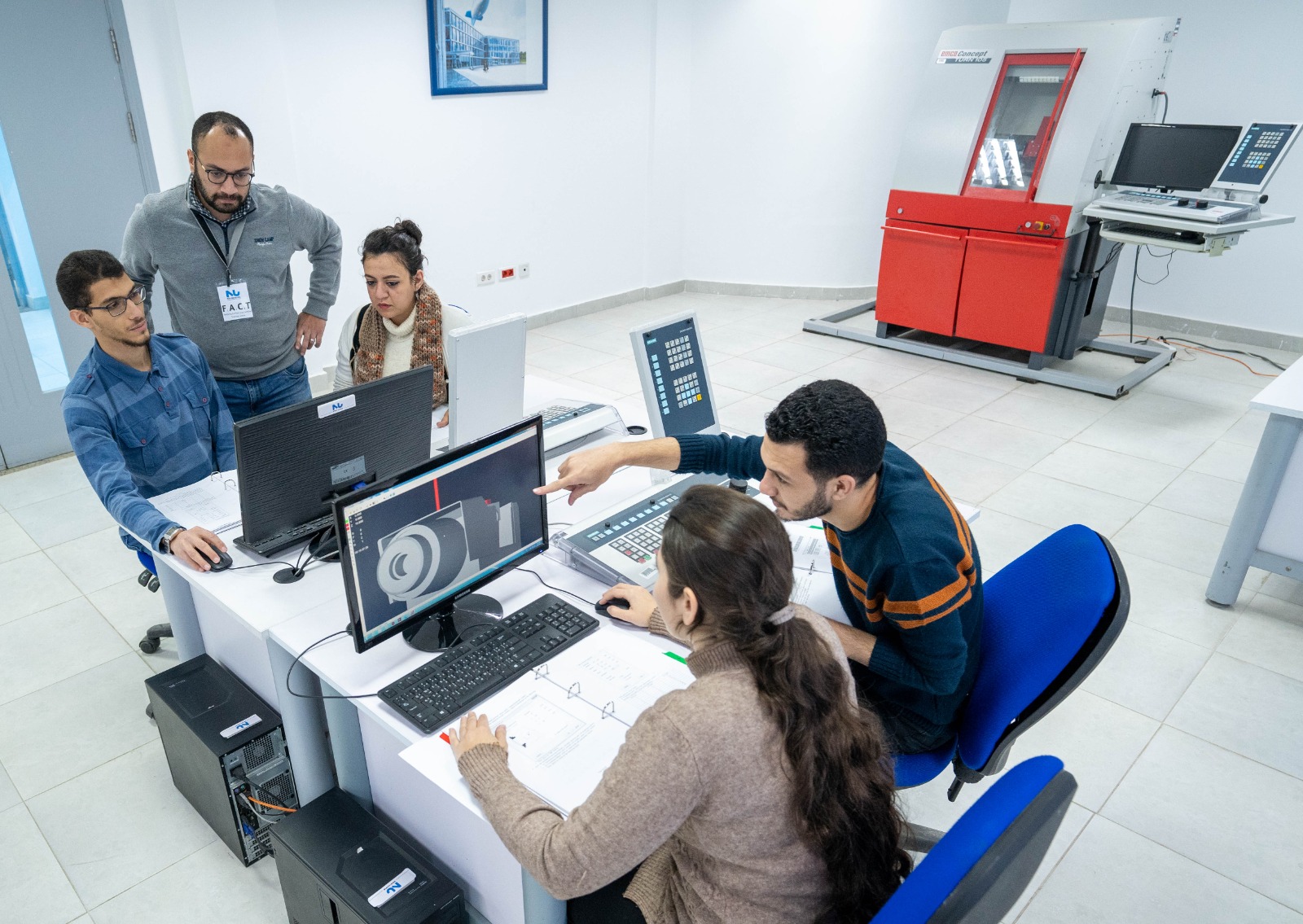
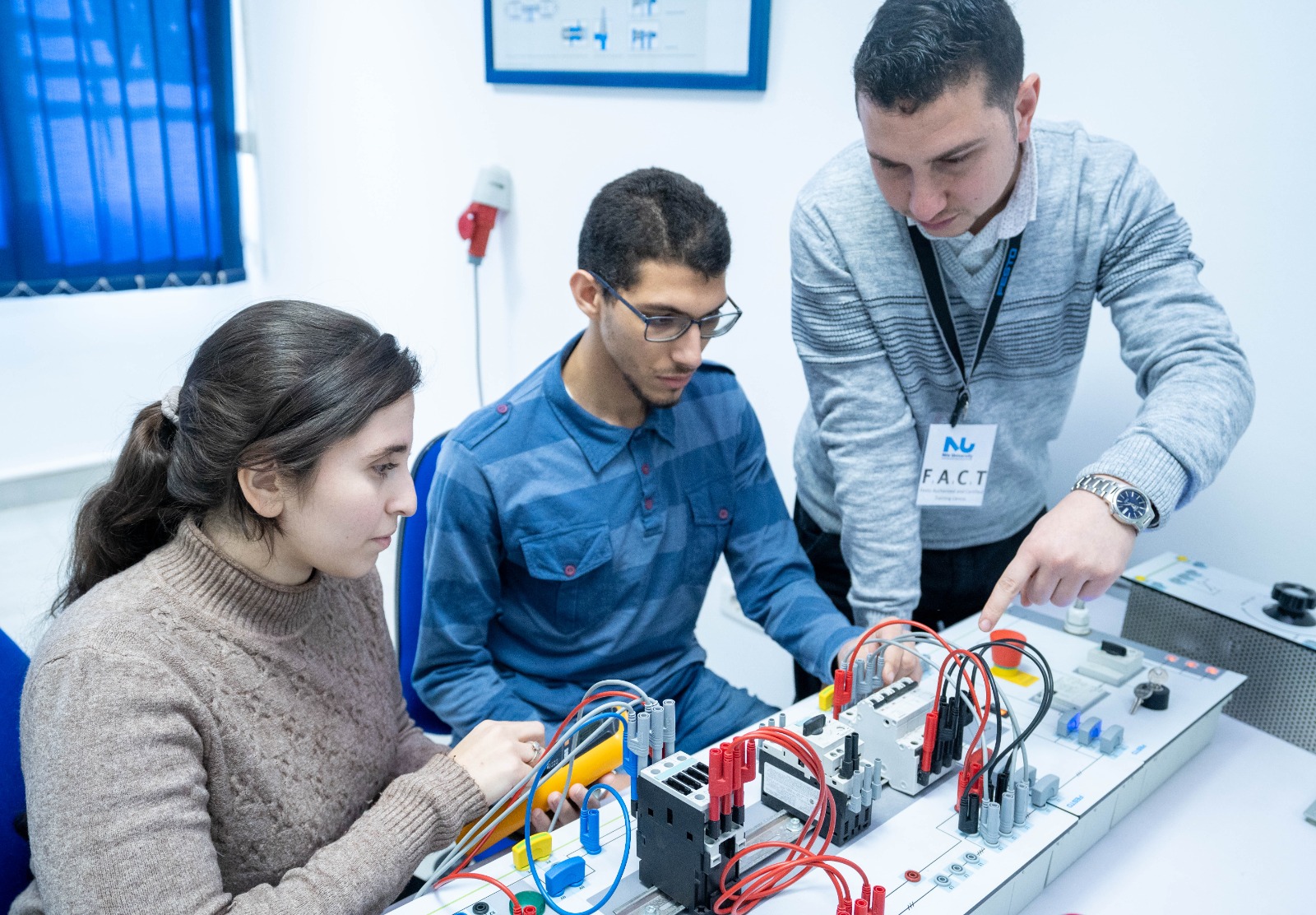
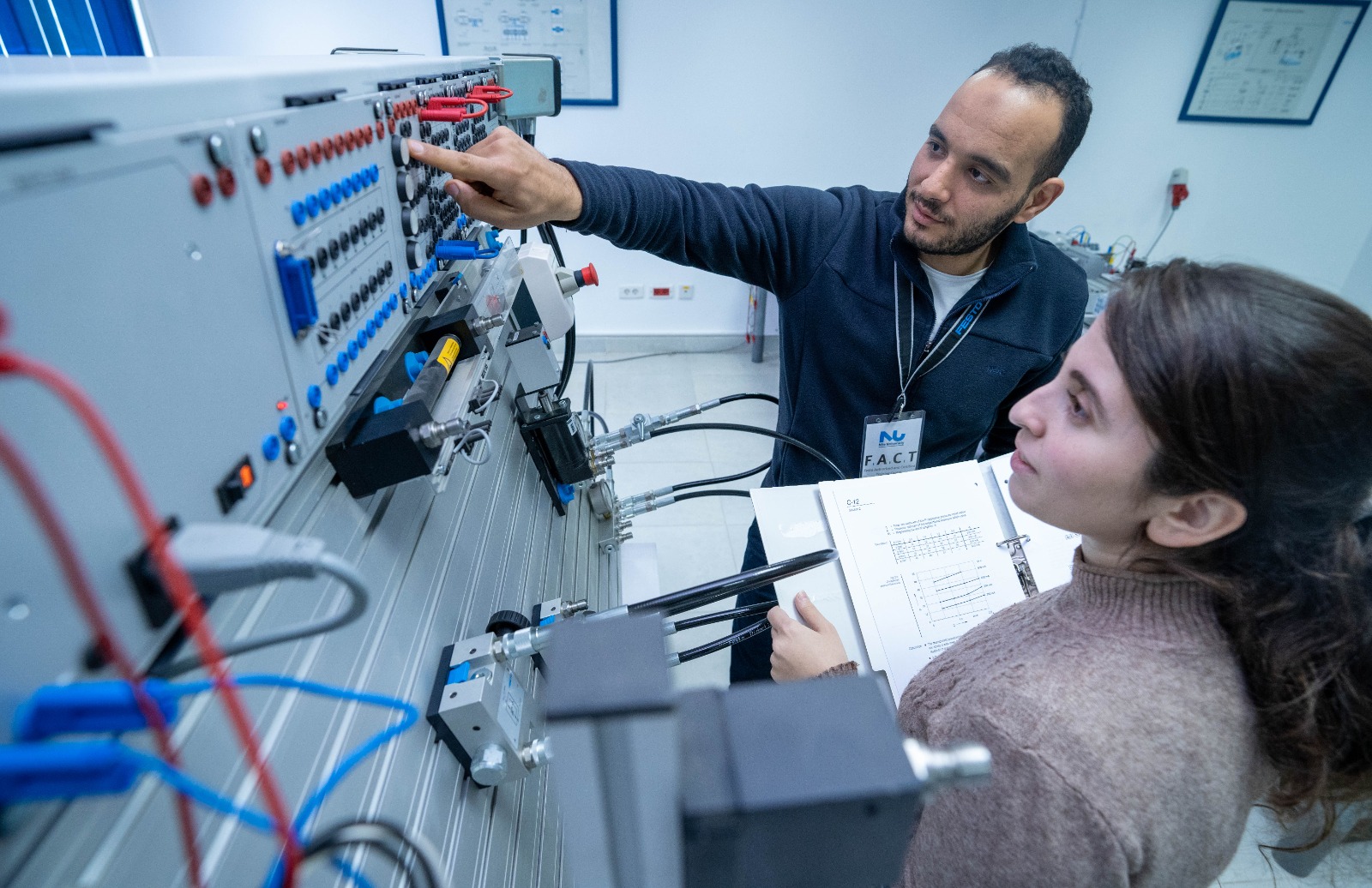
At the F.A.C.T Centre, technology and innovation converge to shape the future of manufacturing and productivity. Our Industrial Automation Technologies program introduces you to the transformative world of automation and robotics.

Contact Hours per Course
Days per Course
Credential

Credential

FESTO Certificate

Location

Location

On-Campus

Language

Language

English
(Arabic Support)

Program overview

This program is made up of six courses, each of which can be taken separately or combined to build a full skill set — spanning automation and mechatronics fundamentals, PLC programming from basic to advanced, industrial robotics, and closed-loop process control. Whether you're starting from scratch or looking to specialize, you can choose the course that fits your goals.

Courses

Short description: This training module introduces the 4 important tasks which are required in the Industry - Installation & Commissioning, Programming, Communication and Maintenance & Trouble Shooting.

Contents:

  • Planning to set-up a Flexibel Manufacturing System - FMS
  • Installation and Commissioning of the FMS
  • Test the entire material- and signal flow through the FMS
  • Function of a PLC in general and of the ML 1500 in particular
  • Structure of a PLC program
  • Project solutions for the single FMS stations in Ladder Diagram
  • Theory about Industrial Communication in general and I/O in particular
  • Theory about the 3-phases of Trouble Shooting
  • Trouble Shooting within the entire FMS process

Competencies: The participant ...

  • the four tasks required by the Industry
  • is able to plan a project according to a workpiece description
  • is able to set-up a networked system
  • is able to adjust mechanical, electrical and pneumatic components
  • understands the basic principals of a PLC
  • is able to plan, edit and test project solutions with PLC´s
  • understands the 3 levels of industrial communication
  • understands the difference between Maintenance and Trouble Shooting
  • is able to detect errors, limitate errors and eliminate errors professionally
  • Prerequisites: No prerequisites required

Price: 

  • Industry: 18,000 EGP
  • NU Students: 4,500 EGP
  • Non-NU Students: 5,400 EGP

Short description: This training program is focussing on the structure and mode of operation of the Alan Bradley PLC as well as how to create basic logic association programs. A key element of the workshop is application and handling, using the programming terminology and taking into account the various interfaces between the individual technologies (mechanical, pneumatics, electrical and PLC)

Contents:

  • Overview of controllers used in the Industry
  • PLC fundamentals in general and of Allan Bradley PLC in particular
  • Functions of the components used in the MPS stations
  • Handling of the programming software RSLogix 500
  • Definition of the in- and output addresses of the MPS stations
  • Absolute and symbolic addressing
  • Structural programming and uncondition and condition call
  • Planning, edit and test projects in digital technology

Competencies: The participant ...

  • knows the different controllers used in the Industry
  • understands the function of all componentes used in the MPS stations
  • understands the function of a PLC in general and ML 1500 in particular
  • is able to define the in- and outputs used in the MPS stations
  • understands the absolute and symbolic addressing of in- and outputs
  • has an overview about the PLC programming languages - LAD, STL, FBD
  • knows all basic digital modules - AND, OR, NOT, RS-FF ...
  • is able to plan, edit and test PLC projects in Ladder Diagram

Prerequisites: No prerequisites required

Price: 

  • Industry: 18,000 EGP
  • NU Students: 4,500 EGP
  • Non-NU Students: 5,400 EGP

Short description: This training module is based on the know-how of the basic PLC programming module by transferring that know-how to the single stations of a Flexible Manufacturing System. The participants will plan, edit and test PLC project solutions for the single stations of the Factory Automation system called MPS 200.

Contents:

  • Functions of the single FMS stations
  • Components - specification and function
  • Definition of the input and output addresses of the FMS stations
  • Absolute and symbolic addressing
  • Plan, edit and test PLC projects for each single FMS station
  • Planning of the I/O-communication between the single stations
  • Plan, edit and test the I/O-communication
  • Plan, edit and test the material- and signal flow through the entire FMS

Competencies: The participant ...

  • knows the functions and symbols of different sensors and actuators
  • is able to distribute an entire project into logical steps
  • is able to plan a step-by-step programming solution with a PLC
  • is able to test a programming solution according to a specification
  • understands the levels of industrial communication
  • is able to plan an I/O-communication within a FMS
  • understands the Stop and Emergency Stop conditions within a FMS
  • is able to test an entire project solution according to a specification

Prerequisites: Completion of PLC 131or basic know-how in PLC programming

Price: 

  • Industry: 21,600 EGP
  • NU Students: 5,400 EGP
  • Non-NU Students: 6,480 EGP

Short description: As a preparation of controlling analogue signals and closed loop Process Automation equipment, we have to work-out the know-how in Word processing, arithmetic functions of a PLC and analogue in- and output control first. This workshop is providing that know-how using our high ophisticated Process Automation Workstations.

Contents:

  • Functions of the MPS PA Workstations
  • Components - specification and function
  • Definition of the input and output addresses
  • Absolute and symbolic addressing
  • Theory of analogue inputs and normalization
  • Arithmetic functions of the PLC - theory and exercises
  • Project using analogue inputs and normalization to the process variable
  • Project using analogue outputs and normalization to the process variable
  • Plan, edit and test of a 2-step controller

Competencies: The participant ...

  • understands the difference between binary, analogue and digital signal
  • knows the function of components used in Process Automation
  • understands the difference between absolute and symbolic addressing
  • knows the theory of analogue in- and outputs of a PLC
  • is able to plan, edit and test projects using analogue signals
  • is able to plan, edit and test normalization of analogue signals
  • is able to plan, edit and test a 2-step controller

Prerequisites: Completion of PLC 131 and/or PLC 232

Price: 

  • Industry: 21,600 EGP
  • NU Students: 5,400 EGP
  • Non-NU Students: 6,480 EGP

Short description: In flexible automation, Industrial Robots are among the most important components. They allow automated processes to be adjusted rapidly. Especially in the future of Industry 4.0, Industrial Robots will be indispensable.

Contents:

  • Robot applications in the industry now and in the future
  • Different types of Robots
  • Part systems of an Industrial Robot
  • Handling of the 3D simulation program CIROS
  • Renumber the existing position numbers
  • Plan, edit and test projects using CIROS
  • Handling of the online software version
  • Teach in and renumber of the existing positions
  • Test the simulated projects on the real Robot

Competencies: The participant ...

  • Knows different Robot types and their applications in the industry
  • Knows the part systems of an Industrial Robot
  • Is able to plan, edit and test Industrial Robot projects
  • Is able to Teach in and renumber Robot positions
  • Is able to download and test Industrial Robot applications

Prerequisites: Completion of EPB 121 or basic know-how in Electro-Pneumatics and in operating a PC with Windows interface

Price: 

  • Industry: 18,000 EGP
  • NU Students: 4,500 EGP
  • Non-NU Students: 5,400 EGP

​​​​​Short description: More and more closed loop process in the Process Automation Industry are controlled by PLC´s not by Industrial Controllers anymore. Using a PLC has several advantages which this workshop is focusing on

Contents:

  • Preparation of the MPS PA Workstations
  • Installation and Commissioning of the MPS PA
  • Theory of closed loop technology
  • Closed loop control of the level and flow using the computer
  • Optimize the parameters for level and flow control using the computer
  • Analogue in- and output normalization
  • Closed loop control of the level, pressure and flow with the PLC

Competencies: The participant ...

  • is able to install and commission Process Automation stations
  • understands the theory of closed loop technology
  • is able to set-up a closed loop control by a computer
  • is able to optimize the corresponding parameters for level and flow control
  • understands the functions of analogue in- and outputs of a PLC
  • is able to normalize the signals of analogue in- and outputs
  • is able to plan, edit and test a closed loop control with a PLC

Prerequisites: Completion of PLC 233

Price: 

  • Industry: 21,600 EGP
  • NU Students: 5,400 EGP
  • Non-NU Students: 6,480 EGP
NU Students
75% Discount
Non-NU Students
70% Discount
F.A.C.T Training Programs Brochure

Have Questions?

Please reach out us for any guidance or assistance.